What Is Performance Based Advertising? A Complete Guide
Advertising has changed a lot in the last decade. Businesses no longer want to just show ads. They want results. This is where performance based advertising comes in. It has become one of the most popular ways to market products online. In this article, we will explain what it means, how it works, and why so many businesses trust it.
What Is Performance Based Advertising?
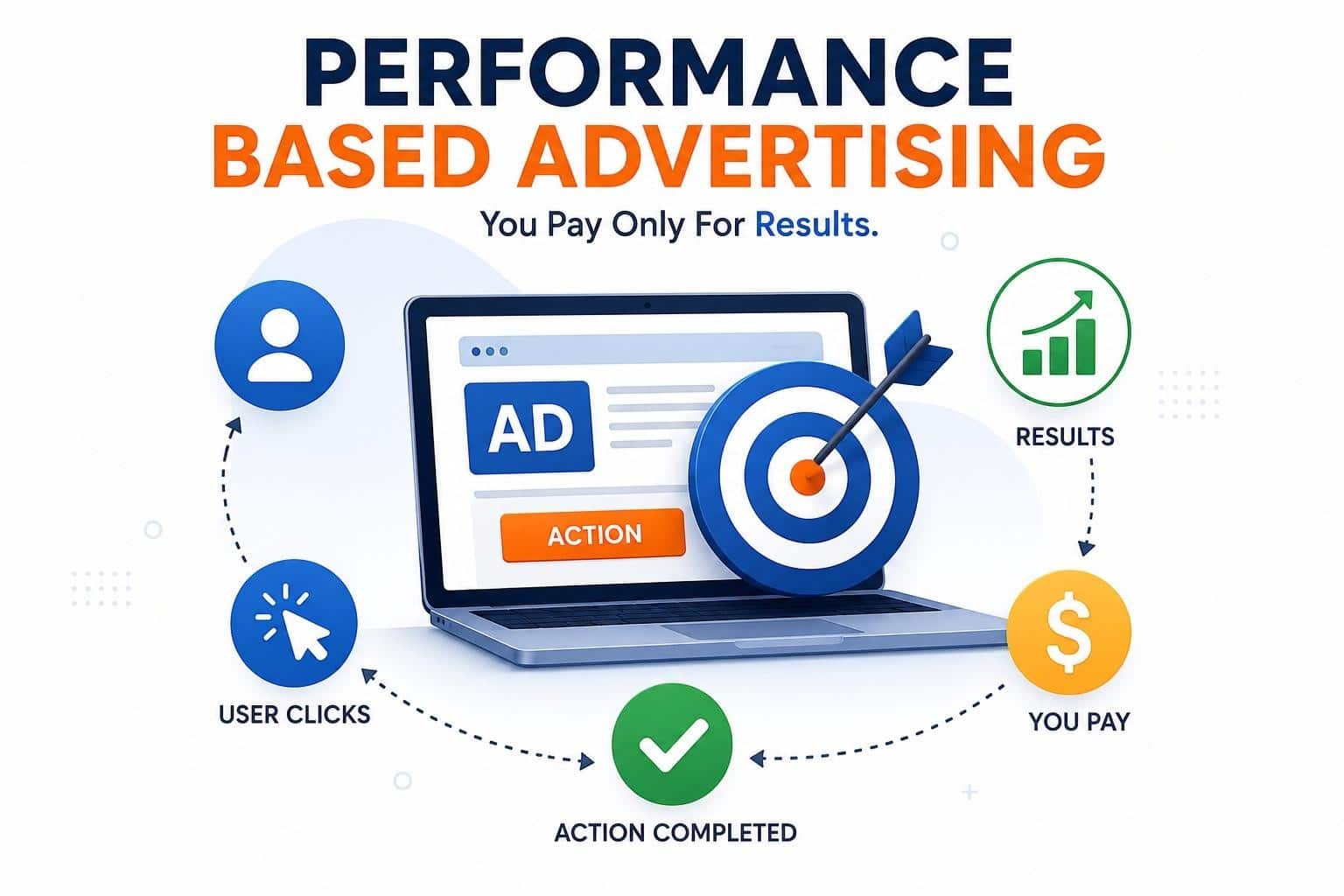
Performance based advertising is a type of marketing where advertisers pay only when a specific action happens. This action could be a click, a sale, a sign-up, or a download. It is different from traditional advertising. In traditional ads, you pay a fixed amount no matter what happens. With performance based advertising, you pay based on real results.
This model is popular because it reduces risk. Businesses do not waste money on ads that do not work. They only pay when something valuable happens. This makes it a smart choice for small businesses and large companies alike.
How Does Performance Based Advertising Work?
The process is simple. An advertiser creates an ad campaign. They choose a specific goal. This goal could be:
- Getting more website clicks
- Getting more leads
- Getting more sales
- Getting more app installs
The ad is then shown to the right audience. When someone completes the goal action, the advertiser pays. If no one takes action, the advertiser pays nothing, or very little.
Most platforms use tracking tools to measure this. These tools follow the user's journey. They record every click, every form filled, and every purchase made. This data helps businesses see exactly what is working.
Types of Performance Based Advertising
There are several common types. Each one has a different payment model.
Pay-Per-Click (PPC)
This is one of the oldest forms. Advertisers pay every time someone clicks their ad. Google Ads is a well known example.
Pay-Per-Lead (PPL)
Here, advertisers pay when someone fills out a form or signs up. This is common in industries like education and finance.
Pay-Per-Sale (PPS)
This model is used often in affiliate marketing. The advertiser pays only when a sale happens. Amazon Associates is a good example.
Pay-Per-Install (PPI)
This is common for mobile apps. Advertisers pay when someone installs their app.
All these models fall under the umbrella of performance based advertising. The idea stays the same. You pay for results, not just visibility.
Why Businesses Prefer Performance Based Advertising
There are many reasons businesses are shifting toward this model. Let's look at a few simple ones.
Lower Risk
Since you pay only for actions, there is less financial risk. You are not spending money blindly.
Clear Return on Investment
It is easy to measure success. You know exactly how much you spent and what you got in return.
Better Targeting
Most performance based advertising platforms use smart algorithms. These algorithms show ads to people who are more likely to act. This means better results with less wasted spend.
Scalable Growth
If a campaign works well, you can increase your budget. Since results are measurable, scaling becomes easier and safer.
Flexibility for Small Businesses
Small businesses often have tight budgets. Performance based advertising allows them to start small. They can test ideas before spending large amounts.
Where Is Performance Based Advertising Used?
This type of advertising is used across many platforms. Some common examples include:
- Google, Facebook and Instagram Ads
- Affiliate marketing networks and Influencer marketing platforms
- App store advertising networks
Each platform offers different tools to track performance. Businesses can choose the platform that fits their goals best.
Challenges of Performance Based Advertising
Like every method, this one also has some challenges.
Fraud and Fake Clicks
Sometimes, fake clicks or fake leads can happen. This can waste money if not monitored properly.
Need for Constant Optimization
Campaigns need regular checking. What works today may not work next month. Businesses need to adjust often.
Learning Curve
For beginners, understanding tracking tools and analytics can feel confusing at first. It takes time to learn how to read the data properly.
Tips to Get Better Results
If you are new to performance based advertising, here are a few simple tips.
- Set clear goals: Know what action you want users to take.
- Track everything: Use proper tracking tools to measure results.
- Test different ads: Try different headlines, images, and offers.
- Watch your budget: Start small and increase spending slowly.
- Review data weekly.
Final Thoughts
Performance based advertising has changed how businesses think about marketing. It focuses on real results, not just visibility. This makes it a safer and smarter choice for many companies. Whether you are a small business owner or a large brand, this model can help you spend your marketing budget wisely.
As digital marketing keeps growing, performance based advertising will likely become even more common. Learning how it works today can help you stay ahead in the future.
Frequently Asked Questions About Performance Marketing
Performance marketing is a form of digital advertising where the advertiser only pays when a specific, measurable action takes place — such as a click, a lead, a sale, or an app install. Instead of paying a flat fee to display an ad regardless of outcome, businesses pay based on real, trackable results, which makes it a lower-risk way to advertise online.
Digital performance marketing is performance marketing carried out specifically through online channels — search engines, social media, affiliate networks, and mobile app stores. It relies on digital tracking tools like pixels, UTM parameters, and analytics platforms to measure clicks, leads, and sales in real time, allowing advertisers to see exactly how their budget is performing at any moment.
Performance advertising refers to the ad campaigns themselves within a performance marketing strategy — the actual ads run on platforms like Google, Facebook, or Instagram that are designed and priced around a specific outcome, such as pay-per-click (PPC) or pay-per-sale (PPS). The term is often used interchangeably with "performance based advertising."
An advertiser sets a specific goal — such as clicks, leads, sales, or installs — and creates a campaign targeted at the right audience for that goal. Tracking tools then monitor user behavior after they see or click the ad, recording every relevant action. The advertiser only pays when the defined action actually happens, which means budget is spent on real outcomes instead of just ad impressions.
Start by setting one clear, measurable goal — such as leads or sales rather than general visibility. Set up proper tracking tools (like Google Tag Manager and platform pixels) before you spend any budget, so every action is captured accurately. Test different ad creatives, headlines, and offers, start with a small budget, and review your data weekly so you can scale what is working and pause what is not.
Want a Performance Marketing Strategy That Actually Delivers Results?
Get a free performance marketing audit today. We review your current campaigns or build a results-driven strategy from scratch — with full transparency on where every dirham of your budget goes.
WhatsApp Us: +971 55 676 7026